
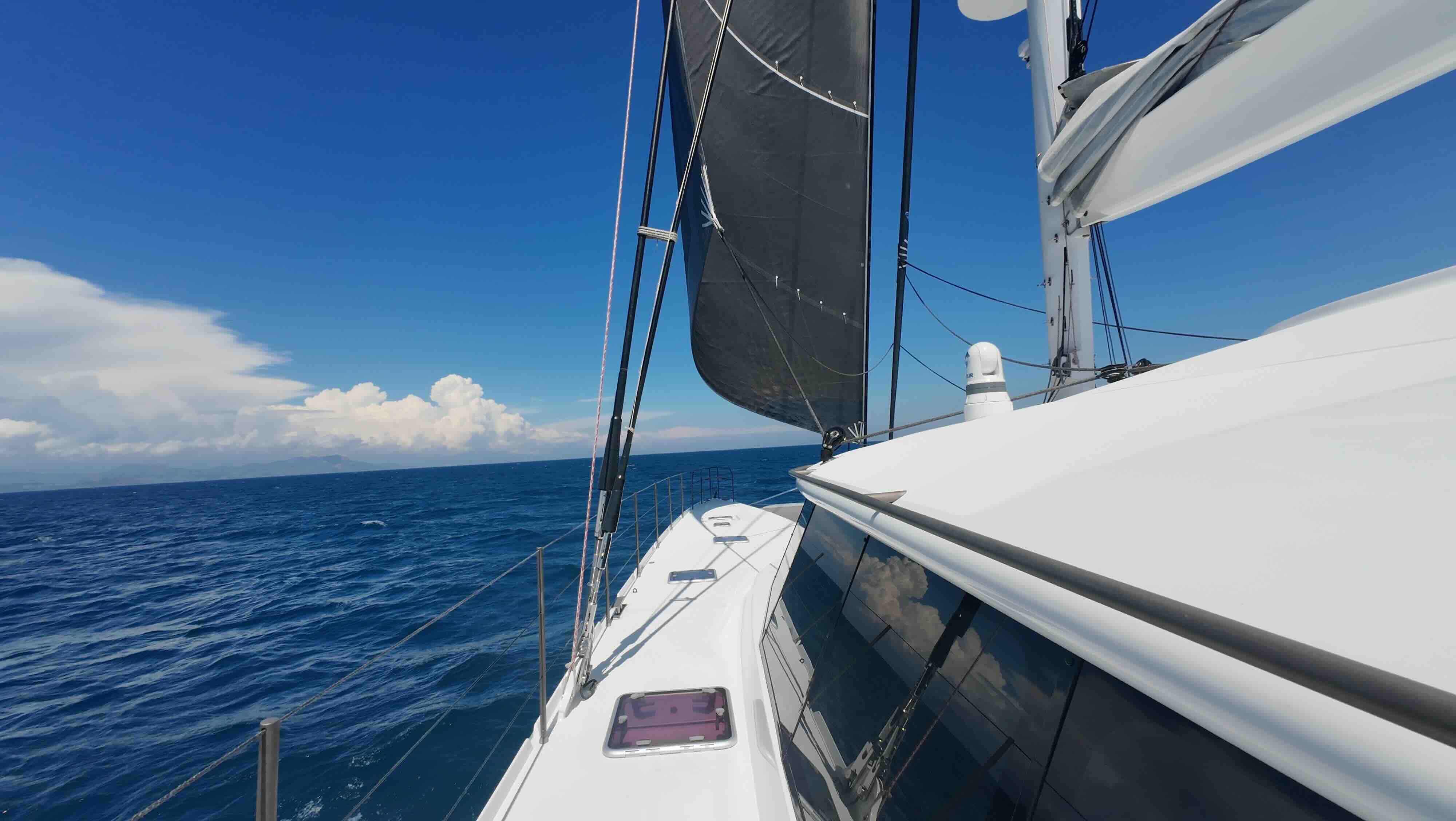
Looking back at land, knowing I would not be seeing itagain for a while, is something I still remember from my first trip across theocean. The feeling was a mix of excitement and something harder to define.
I joined S/Y CatamaranChe in St. Thomas during its shipyard period, about two months before the voyage. The owner planned to sail the boat around the world, and as crew, our job was simple in theory: get the yacht ready to handle it.
In practice, it was anything but simple.
Preparing the boat meant long days working in the heat, surrounded by constant movement and noise. The yard was always active. Teams were sanding the hull, equipment was moving, and systems were being opened up and rebuilt. It was physical, detailed work, and there was always more to do.
Che was also due for her two-year inspection under Bureau Veritas. Everything had to meet strict standards. Nothing could be overlooked.
We worked through critical systems one by one. Through hulls were inspected and serviced. The anchor chain was measured link by link for wear. Rigging was repaired and reinstalled. The Genoa sail was fitted back on after maintenance. The variable pitch propellers were cleaned, greased, and rebuilt.
At the same time, systems across the vessel, from engineering spaces to deck operations, were tested and refined. Every detail mattered.
One day that stands out was installing the forward rigging for the jib.
The contractors arrived early, and we began hoisting equipment up the mast using the winches. Some crewwere high above, others on deck coordinating. There was no room for mistakes.Between the height, the equipment, and the value of the vessel, everything hadto be executed precisely.
When the job was completed cleanly, without injury or error, that alone felt like the accomplishment of the day.
As the shipyard period came to an end, the focus shifted.
We cleaned the yacht from top to bottom. Decks were scrubbed, stainless steel polished, and interior spaces reset. What had been a worksite started to look like a finished yacht again.
After relaunch, we ransea trials at full speed, testing maneuverability and making sure everythingworked as expected.
Shortly after, the ownerarrived with guests for a ten-day trip through the Caribbean.
This was a differentside of the experience.
The boat that had justgone through weeks of heavy work now had to operate smoothly. Daily lifeonboard became structured. Maintaining the yacht, supporting operations, andkeeping everything running cleanly behind the scenes.
There were moments tostep away, to jump in the water or join short excursions, but most of the timewas spent working. Polishing, cleaning, maintaining systems, often out of sightbut always necessary.
I also spent time in the galley helping the chef, which opened my eyes to a completely different side of life onboard.
Once the trip ended, everything shifted again.
The yacht was no longer preparing for guests. It was preparing for the crossing.
Furniture was secured, cushions stored, and the boat was reset for offshore conditions. Crew rotated, provisions were loaded, and final checks were made.
Then came departure.
We left early in the morning, raising the anchor and setting out from the Caribbean. Watching the islands slowly disappear behind us was a moment that stayed with me.
Before sunset, I set outthe fishing lines. Not long after, I caught a barracuda. Reeling it in withland fading into the horizon felt like the beginning of something much bigger.
It was the last time I would see land for a while.
And it was only the start of the journey.
By Jordan Savad


